🇦🇶 Antarctica
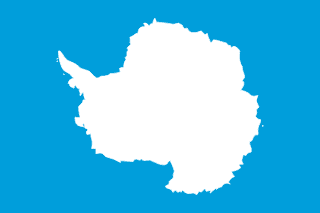 National Flag
Geography & Borders
This country has no land borders.
Introduction & Background
Antarctica (/ænˈtɑːrktɪkə/ⓘ)note 1 is Earth's southernmost and least-populated continent. Situated almost entirely south of the Antarctic Circle and surrounded by the Southern Ocean, it contains the geographic South Pole. Antarctica is the fifth-largest continent, being about 40% larger than Europe, and has an area of 14,200,000km2 (5,500,000sqmi). Most of Antarctica is covered by the Antarctic ice sheet, with an average thickness of 1.9km (1.2mi).
Antarctica is, on average, the coldest, driest, and windiest of the continents, and it has the highest average elevation. It is mainly a polar desert, with annual precipitation of over 200mm (8in) along the coast and far less inland. About 70% of the world's freshwater reserves are frozen in Antarctica, which, if melted, would raise global sea levels by almost 60 metres (200ft). Antarctica holds the record for the lowest measured temperature on Earth, −89.2°C (−128.6°F). The coastal regions can reach temperatures over 10°C (50°F) in summer. Native species of animals include mites, nematodes, penguins, seals and tardigrades. Where vegetation occurs, it is mostly in the form of lichen or moss.
Minerals
No mineral species have their type localities (original discovery site) defined within Antarctica in the Wikidata database. Explore other galleries to view geographic and climate data.
Flora & Flowers
Antarctica is home to a diverse range of plant species. Explore some of the native plants and flowers found in Antarctica below:
Loading plant species...
Animals & Wildlife
Antarctica is home to a diverse range of animal species. Explore some of the native animals and wildlife found in Antarctica below:
Loading animal species...
Music Albums
Explore the top 30 most-played music albums in Antarctica, sourced from Apple Music charts:
Loading music charts…