🇳🇿 New Zealand
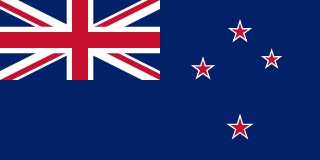 National Flag
Geography & Borders
This country has no land borders.
Introduction & Background
New Zealand (Template:Lang-mi Template:IPA-mi) is an island country in the southwestern Pacific Ocean. It consists of two main landmasses—the North Island (Te Ika-a-Māui) and the South Island (Te Waipounamu)—and over 700 smaller islands. It is the sixth-largest island country by area, covering 268,021 square kilometres (103,500sqmi). New Zealand is about 2,000 kilometres (1,200mi) east of Australia across the Tasman Sea and 1,000 kilometres (600mi) south of the islands of New Caledonia, Fiji, and Tonga. The country's varied topography and sharp mountain peaks, including the Southern Alps, owe much to tectonic uplift and volcanic eruptions. New Zealand's capital city is Wellington, and its most populous city is Auckland.
The islands of New Zealand were the last large habitable land to be settled by humans. Between about 1280 and 1350, Polynesians began to settle in the islands and then developed a distinctive Māori culture. In 1642, the Dutch explorer Abel Tasman became the first European to sight and record New Zealand. In 1840, representatives of the United Kingdom and Māori chiefs signed the Treaty of Waitangi, which in its English version declared British sovereignty over the islands. In 1841, New Zealand became a colony within the British Empire. Subsequently, a series of conflicts between the colonial government and Māori tribes resulted in the alienation and confiscation of large amounts of Māori land. New Zealand became a dominion in 1907; it gained full statutory independence in 1947, retaining the monarch as head of state. Today, the majority of New Zealand's population of 5.1 million is of European descent; the indigenous Māori are the largest minority, followed by Asians and Pacific Islanders. Reflecting this, New Zealand's culture is mainly derived from Māori and early British settlers, with recent broadening of culture arising from increased immigration. The official languages are English, Māori, and New Zealand Sign Language, with the local dialect of English being dominant.
Minerals
New Zealand is the type locality (the site where the mineral was first discovered and described) for 5 recognized mineral species. Explore these discoveries below:
Loading mineral discoveries...
Flora & Flowers
New Zealand is home to a diverse range of plant species. Explore some of the native plants and flowers found in New Zealand below:
Loading plant species...
Animals & Wildlife
New Zealand is home to a diverse range of animal species. Explore some of the native animals and wildlife found in New Zealand below:
Loading animal species...
Music Albums
Explore the top 30 most-played music albums in New Zealand, sourced from Apple Music charts:
Loading music charts…