🇵🇬 Papua New Guinea
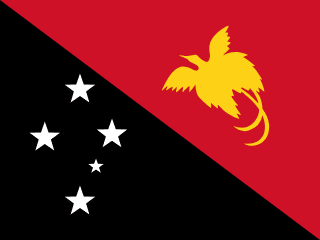 National Flag
Geography & Borders

Introduction & Background
Papua New Guinea (abbreviated PNG; /ˈpæp(j)uə...ˈɡɪni, ˈpɑː-/, also US: /ˈpɑːpwə-, ˈpɑːpjə-, ˈpɑːpə-/;11 Template:Lang-tpi; Template:Lang-ho), officially12 the Independent State of Papua New Guinea (Template:Lang-tpi; Template:Lang-ho), is a country in Oceania that comprises the eastern half of the island of New Guinea and its offshore islands in Melanesia (a region of the southwestern Pacific Ocean north of Australia). Its capital, located along its southeastern coast, is Port Moresby. The country is the world's third largest island country, with an area of 462,840km2 (178,700mi2).13
At the national level, after being ruled by three external powers since 1884, including nearly 60 years of Australian administration starting during World War I, Papua New Guinea established its sovereignty in 1975. It became an independent Commonwealth realm in 1975 with Elizabeth II as its queen. It also became a member of the Commonwealth of Nations in its own right.
Minerals
Papua New Guinea is the type locality (the site where the mineral was first discovered and described) for 1 recognized mineral species. Explore these discoveries below:
Loading mineral discoveries...
Flora & Flowers
Papua New Guinea is home to a diverse range of plant species. Explore some of the native plants and flowers found in Papua New Guinea below:
Loading plant species...
Animals & Wildlife
Papua New Guinea is home to a diverse range of animal species. Explore some of the native animals and wildlife found in Papua New Guinea below:
Loading animal species...
Music Albums
Explore the top 30 most-played music albums in Papua New Guinea, sourced from Apple Music charts:
Loading music charts…