Land
Home
Continents
  • All Galleries
  • Elevation Maps
  • Minerals
  • Flora & Flowers
  • Animals & Wildlife
  • Climate Change
  • Music Albums
Home
Continents
  • All Galleries
  • Elevation Maps
  • Minerals
  • Flora & Flowers
  • Animals & Wildlife
  • Climate Change
  • Music Albums
  • South America

    • South America
    • South America Elevation
    • South America Minerals
    • South America Flora & Flowers
    • South America Animals & Wildlife
    • South America Music Albums
    • South America Climate Change
    • Argentina
    • Bolivia
    • Brazil
    • Chile
    • Colombia
    • Ecuador
    • Falkland Islands
    • French Guiana
    • Guyana
    • Paraguay
    • Peru
    • Suriname
    • Uruguay
    • Venezuela
  • All Continents

🇧🇴 Bolivia

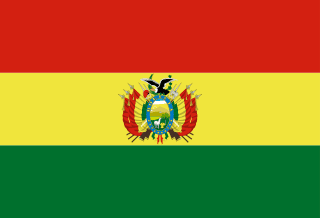
Flag of BoliviaNational Flag

Geography & Borders

ArgentinaArgentinaBrazilBrazilChileChileParaguayParaguayPeruPeru

Introduction & Background

Bolivia,b officially the Plurinational State of Bolivia,c1112 is a landlocked country located in western-central South America. It is bordered by Brazil to the north and east, Paraguay to the southeast, Argentina to the south, Chile to the southwest and Peru to the west. The seat of government and executive capital is La Paz, while the constitutional capital is Sucre. The largest city and principal industrial center is Santa Cruz de la Sierra, located on the Llanos Orientales (tropical lowlands), a mostly flat region in the east of the country.

The sovereign state of Bolivia is a constitutionally unitary state, divided into nine departments. Its geography varies from the peaks of the Andes in the West, to the Eastern Lowlands, situated within the Amazon basin. One-third of the country is within the Andean mountain range. With 1,098,581km2 (424,164sqmi) of area, Bolivia is the fifth largest country in South America, after Brazil, Argentina, Peru, and Colombia (and alongside Paraguay, one of the only two landlocked countries in the Americas), the 27th largest in the world, the largest landlocked country in the Southern Hemisphere, and the world's seventh largest landlocked country, after Kazakhstan, Mongolia, Chad, Niger, Mali, and Ethiopia.

Overview
AttributeDetails
Official Name
Plurinational State of Bolivia
Capital
Sucre
Continent
South America
Region / Subregion
Americas / South America
Population
11,312,620
Area
1,098,581 km²
Languages
Aymara, Guaraní, Quechua, Spanish
Currencies
Bolivian boliviano (Bs.) [BOB]
Cost of Living
32 / 100 (Low)
Price per Coffee
$1.60
Price per Meal
$7.00
Timezones
UTC-04:00 (BOT)
Bounding Box
Min: (22.87° S, 69.59° W)
Max: (9.76° S, 57.5° W)
Climate
Tropical / Warm
Terrain
Diverse, featuring the Andes mountains in the west, Amazon basin in the north-central, and plains in the south
GDP (Nominal)
$54.88 billion (2024)
GDP (PPP)
$159.85 billion (2024)
GDP Growth Rate
-1.12% (2024)
Macroeconomic Overview
The economy of Bolivia is the 89th-largest in the world in nominal terms and the 90th-largest in purchasing power parity. Bolivia is classified by the World Bank to be a lower middle income country. With a Human Development Index of 0.703, it is ranked 114th. Driven largely by its natural resources, Bolivia has become a region leader in measures of economic growth, fiscal stability and foreign reserves, although it remains a historically poor country. The Bolivian economy has had a historic single-commodity focus. From silver to tin to coca, Bolivia has enjoyed only occasional periods of economic diversification. Political instability and difficult topography have constrained efforts to modernize the agricultural sector. Similarly, relatively low population growth coupled with low life expectancy has kept the labor supply in flux and prevented industries from flourishing. Rampant inflation and corruption previously created development challenges, but in the early twenty-first century the fundamentals of its economy showed unexpected improvement, leading Moody's Investors Service to upgrade Bolivia's economic rating in 2010 from B2 to B1. The mining industry, especially the extraction of natural gas and zinc, currently dominates Bolivia's export economy.

Geography & Climate


  • Map Locations: Google Maps | OpenStreetMap

Minerals

Bolivia is the type locality (the site where the mineral was first discovered and described) for 32 recognized mineral species. Explore these discoveries below:

Loading mineral discoveries...

Flora & Flowers

Bolivia is home to a diverse range of plant species. Explore some of the native plants and flowers found in Bolivia below:

Loading plant species...

Animals & Wildlife

Bolivia is home to a diverse range of animal species. Explore some of the native animals and wildlife found in Bolivia below:

Loading animal species...

Music Albums

Explore the top 30 most-played music albums in Bolivia, sourced from Apple Music charts:

Loading music charts…


← Back to South America

Prev
Argentina
Next
Brazil