🇨🇱 Chile
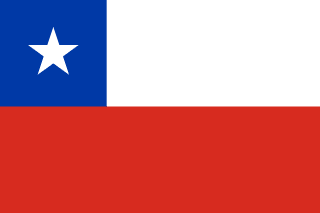 National Flag
Geography & Borders


Introduction & Background
Chile,a officially the Republic of Chile,b is a country in the western part of South America. It is the southernmost country in the world, and the closest to Antarctica, occupying a long and narrow strip of land between the Andes to the east and the Pacific Ocean to the west. Chile covers an area of 756,096 square kilometers (291,930sqmi), with a population of 17.5 million as of 2017.5 It shares land borders with Peru to the north, Bolivia to the north-east, Argentina to the east, and the Drake Passage in the far south. Chile also controls the Pacific islands of Juan Fernández, Isla Salas y Gómez, Desventuradas, and Easter Island in Oceania. It also claims about 1,250,000 square kilometers (480,000sqmi) of Antarctica under the Chilean Antarctic Territory.nb 2 The country's capital and largest city is Santiago, and its national language is Spanish.
Spain conquered and colonized the region in the mid-16th century, replacing Inca rule, but failing to conquer the independent Mapuche who inhabited what is now south-central Chile. In 1818, after declaring independence from Spain, Chile emerged in the 1830s as a relatively stable authoritarian republic. In the 19th century, Chile saw significant economic and territorial growth, ending Mapuche resistance in the 1880s and gaining its current northern territory in the War of the Pacific (1879–83) after defeating Peru and Bolivia. In the 20th century up to the 1970s Chile saw a process of democratization,1011 rapid population growth and urbanization12 and increasing reliance on exports from copper mining for its economy.1314 During the 1960s and 1970s, the country experienced severe left-right political polarization and turmoil. This development culminated with the 1973 Chilean coup d'état that overthrew Salvador Allende's democratically elected left-wing government and instituted a 16-year right-wing military dictatorship of Augusto Pinochet that left more than 3,000 people dead or missing.15 The regime ended in 1990 after a referendum in 1988 and was succeeded by a center-left coalition which ruled until 2010.
Minerals
Chile is the type locality (the site where the mineral was first discovered and described) for 110 recognized mineral species. Explore these discoveries below:
Loading mineral discoveries...
Flora & Flowers
Chile is home to a diverse range of plant species. Explore some of the native plants and flowers found in Chile below:
Loading plant species...
Animals & Wildlife
Chile is home to a diverse range of animal species. Explore some of the native animals and wildlife found in Chile below:
Loading animal species...
Music Albums
Explore the top 30 most-played music albums in Chile, sourced from Apple Music charts:
Loading music charts…