Land
Home
Continents
  • All Galleries
  • Elevation Maps
  • Minerals
  • Flora & Flowers
  • Animals & Wildlife
  • Climate Change
  • Music Albums
Home
Continents
  • All Galleries
  • Elevation Maps
  • Minerals
  • Flora & Flowers
  • Animals & Wildlife
  • Climate Change
  • Music Albums
  • Asia

    • Asia
    • Asia Elevation
    • Asia Minerals
    • Asia Flora & Flowers
    • Asia Animals & Wildlife
    • Asia Music Albums
    • Asia Climate Change
    • Afghanistan
    • Armenia
    • Azerbaijan
    • Bahrain
    • Bangladesh
    • Bhutan
    • Brunei
    • Cambodia
    • China
    • Georgia
    • Hong Kong
    • India
    • Indonesia
    • Iran
    • Iraq
    • Israel
    • Japan
    • Jordan
    • Kazakhstan
    • Kuwait
    • Kyrgyzstan
    • Laos
    • Lebanon
    • Macau
    • Malaysia
    • Maldives
    • Mongolia
    • Myanmar
    • Nepal
    • North Korea
    • Oman
    • Pakistan
    • Palestine
    • Philippines
    • Qatar
    • Saudi Arabia
    • Singapore
    • South Korea
    • Sri Lanka
    • Syria
    • Taiwan
    • Tajikistan
    • Thailand
    • Timor-Leste
    • Türkiye
    • Turkmenistan
    • United Arab Emirates
    • Uzbekistan
    • Vietnam
    • Yemen
  • All Continents

🇮🇳 India

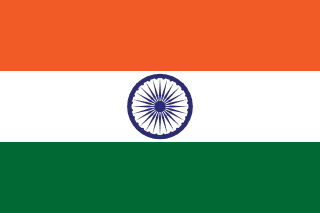
Flag of IndiaNational Flag

Geography & Borders

BangladeshBangladeshBhutanBhutanMyanmarMyanmarChinaChinaNepalNepalPakistanPakistan

Introduction & Background

India, officially the Republic of India (Hindi: Bhārat Gaṇarājya),25 is a country in South Asia. It is the seventh-largest country by area, the second-most populous country, and the most populous democracy in the world. Bounded by the Indian Ocean on the south, the Arabian Sea on the southwest, and the Bay of Bengal on the southeast, it shares land borders with Pakistan to the west;f China, Nepal, and Bhutan to the north; and Bangladesh and Myanmar to the east. In the Indian Ocean, India is in the vicinity of Sri Lanka and the Maldives; its Andaman and Nicobar Islands share a maritime border with Thailand, Myanmar, and Indonesia.

Modern humans arrived on the Indian subcontinent from Africa no later than 55,000 years ago.262728 Their long occupation, initially in varying forms of isolation as hunter-gatherers, has made the region highly diverse, second only to Africa in human genetic diversity.29 Settled life emerged on the subcontinent in the western margins of the Indus river basin 9,000 years ago, evolving gradually into the Indus Valley Civilisation of the third millennium BCE.30 By 1200BCE, an archaic form of Sanskrit, an Indo-European language, had diffused into India from the northwest.3132 Its evidence today is found in the hymns of the Rigveda. Preserved by a resolutely vigilant oral tradition, the Rigveda records the dawning of Hinduism in India.33 The Dravidian languages of India were supplanted in the northern and western regions.34 By 400BCE, stratification and exclusion by caste had emerged within Hinduism,35 and Buddhism and Jainism had arisen, proclaiming social orders unlinked to heredity.36 Early political consolidations gave rise to the loose-knit Maurya and Gupta Empires based in the Ganges Basin.37 Their collective era was suffused with wide-ranging creativity,38 but also marked by the declining status of women,39 and the incorporation of untouchability into an organised system of belief.g40 In South India, the Middle kingdoms exported Dravidian-languages scripts and religious cultures to the kingdoms of Southeast Asia.41

Overview
AttributeDetails
Official Name
Republic of India
Capital
New Delhi
Continent
Asia
Region / Subregion
Asia / Southern Asia
Population
1,417,492,000
Area
3,287,590 km²
Languages
English, Hindi, Tamil
Currencies
Indian rupee (₹) [INR]
Cost of Living
24.4 / 100 (Low)
Price per Coffee
$1.22
Price per Meal
$4.53
Timezones
UTC+05:30 (IST)
Bounding Box
Min: (7.97° N, 68.18° E)
Max: (35.49° N, 97.4° E)
Climate
Tropical / Warm
Terrain
Indo-Gangetic plains in the north, Deccan plateau in the south, and Himalayas in the far north
GDP (Nominal)
$3.91 trillion (2024)
GDP (PPP)
$16.19 trillion (2024)
GDP Growth Rate
6.49% (2024)
Macroeconomic Overview
India has a developing mixed economy with a notable public sector in strategic sectors. It is the world's sixth-largest economy by nominal GDP and the third-largest by purchasing power parity (PPP) as of April 2026. On a per capita income basis, the nation is ranked 149th by nominal GDP and 119th by PPP-adjusted GDP as of 2026. From independence in 1947 until 1991, economic development was characterized by protectionist economic policies, with extensive state intervention, demand-side economics, natural resource optimization, and regulation. An acute balance of payments crisis in 1991 led to the adoption of a broad economic liberalisation in India and indicative planning. India has about 1,900 public sector companies under a variety of public–private partnership (PPP) models. The government plays a major role in sectors like supercomputing, space and shipping but private participation is growing, especially in space, telecom, and satellite communications.

Geography & Climate


  • Map Locations: Google Maps | OpenStreetMap

Minerals

India is the type locality (the site where the mineral was first discovered and described) for 11 recognized mineral species. Explore these discoveries below:

Loading mineral discoveries...

Flora & Flowers

India is home to a diverse range of plant species. Explore some of the native plants and flowers found in India below:

Loading plant species...

Animals & Wildlife

India is home to a diverse range of animal species. Explore some of the native animals and wildlife found in India below:

Loading animal species...

Music Albums

Explore the top 30 most-played music albums in India, sourced from Apple Music charts:

Loading music charts…


← Back to Asia

Prev
Hong Kong
Next
Indonesia