Land
Home
Continents
  • All Galleries
  • Elevation Maps
  • Minerals
  • Flora & Flowers
  • Animals & Wildlife
  • Climate Change
  • Music Albums
Home
Continents
  • All Galleries
  • Elevation Maps
  • Minerals
  • Flora & Flowers
  • Animals & Wildlife
  • Climate Change
  • Music Albums
  • Asia

    • Asia
    • Asia Elevation
    • Asia Minerals
    • Asia Flora & Flowers
    • Asia Animals & Wildlife
    • Asia Music Albums
    • Asia Climate Change
    • Afghanistan
    • Armenia
    • Azerbaijan
    • Bahrain
    • Bangladesh
    • Bhutan
    • Brunei
    • Cambodia
    • China
    • Georgia
    • Hong Kong
    • India
    • Indonesia
    • Iran
    • Iraq
    • Israel
    • Japan
    • Jordan
    • Kazakhstan
    • Kuwait
    • Kyrgyzstan
    • Laos
    • Lebanon
    • Macau
    • Malaysia
    • Maldives
    • Mongolia
    • Myanmar
    • Nepal
    • North Korea
    • Oman
    • Pakistan
    • Palestine
    • Philippines
    • Qatar
    • Saudi Arabia
    • Singapore
    • South Korea
    • Sri Lanka
    • Syria
    • Taiwan
    • Tajikistan
    • Thailand
    • Timor-Leste
    • Türkiye
    • Turkmenistan
    • United Arab Emirates
    • Uzbekistan
    • Vietnam
    • Yemen
  • All Continents

🇾🇪 Yemen

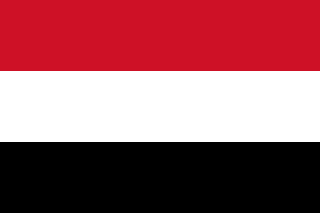
Flag of YemenNational Flag

Geography & Borders

OmanOmanSaudi ArabiaSaudi Arabia

Introduction & Background

Yemen (/ˈjɛmən/ⓘ; Template:Lang-ar), officially the Republic of Yemen,a is a country in Western Asia. It is situated on the southern end of the Arabian Peninsula, and borders Saudi Arabia to the north and Oman to the northeast and shares maritime borders with Eritrea, Djibouti, and Somalia. Yemen is the second-largest Arab sovereign state in the peninsula, occupying 555,000 square kilometres (214,000 square miles), with a coastline stretching about 2,000 kilometres (1,200 miles).9 Its constitutionally stated capital, and largest city, is Sanaa. As of 2021, Yemen has an estimated population of some 30.4 million.

In ancient times, Yemen was the home of the Sabaeans,101112 a trading state that included parts of modern-day Ethiopia and Eritrea. Later in 275 AD, the Himyarite Kingdom was influenced by Judaism.13 Christianity arrived in the fourth century. Islam spread quickly in the seventh century and Yemenite troops were crucial in the early Islamic conquests.14 Several dynasties emerged in the 9th to 16th centuries, such as the Rasulid dynasty.15 The country was divided between the Ottoman and British empires in the 1800s. The Zaydi Mutawakkilite Kingdom of Yemen was established after World War I before the creation of the Yemen Arab Republic in 1962. South Yemen remained a British protectorate as the Aden Protectorate until 1967 when it became an independent state and later, a Marxist-Leninist state. The two Yemeni states united to form the modern Republic of Yemen (al-Jumhūrīyah al-Yamanīyah) in 1990. President Ali Abdullah Saleh was the first president of the new republic until his resignation in 2012 in the wake of the Arab Spring.1617

Overview
AttributeDetails
Official Name
Republic of Yemen
Capital
Sana'a
Continent
Asia
Region / Subregion
Asia / Western Asia
Population
32,684,503
Area
527,968 km²
Languages
Arabic
Currencies
Yemeni rial (﷼) [YER]
Cost of Living
35 / 100 (Moderate)
Price per Coffee
$1.75
Price per Meal
$7.50
Timezones
UTC+03:00 (AST)
Bounding Box
Min: (12.59° N, 42.6° E)
Max: (19° N, 53.11° E)
Climate
Arid / Desertic
Terrain
Deserts, plains, mountains, and plateaus along the coasts
GDP (Nominal)
N/A
GDP (PPP)
N/A
GDP Growth Rate
N/A
Macroeconomic Overview
The economy of Yemen is weak and underdeveloped, even more so since the breakout of the Yemeni Civil War which then led to instability and a growing humanitarian crisis. At the time of unification, South Yemen and North Yemen had different but equally struggling underdeveloped economic systems. Since unification, the economy was further harmed by Yemen's support for Iraq during the 1990–91 Persian Gulf War because Saudi Arabia had expelled almost 1 million Yemeni workers, and both Saudi Arabia and Kuwait significantly reduced economic aid to Yemen. The 1994 civil war further drained Yemen's economy. As a consequence, Yemen relied heavily on aid from multilateral agencies to sustain its economy. In return, it pledged to implement significant economic reforms. In 1997 the International Monetary Fund (IMF) approved two programs to increase Yemen's credit significantly: the enhanced structural adjustment facility and the extended funding facility (EFF). In the ensuing years, Yemen's government attempted to implement recommended reforms: reducing the civil service payroll, eliminating diesel and other subsidies, lowering defense spending, introducing a general sales tax, and privatizing state-run industries. However, limited progress led the IMF to suspend funding between 1999 and 2001.

Geography & Climate


  • Map Locations: Google Maps | OpenStreetMap

Minerals

Yemen is the type locality (the site where the mineral was first discovered and described) for 3 recognized mineral species. Explore these discoveries below:

Loading mineral discoveries...

Flora & Flowers

Yemen is home to a diverse range of plant species. Explore some of the native plants and flowers found in Yemen below:

Loading plant species...

Animals & Wildlife

Yemen is home to a diverse range of animal species. Explore some of the native animals and wildlife found in Yemen below:

Loading animal species...

Music Albums

Explore the top 30 most-played music albums in Yemen, sourced from Apple Music charts:

Loading music charts…


← Back to Asia

Prev
Vietnam