🇲🇳 Mongolia
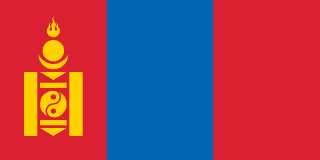 National Flag
Geography & Borders


Introduction & Background
Mongoliac (/mɒŋˈɡoʊliə/ⓘ) is a landlocked country in East Asia, bordered by Russia to the north and China to the south. It covers an area of 1,564,116 square kilometres (603,909 square miles), with a population of just 3.3 million, making it the world's most sparsely populated sovereign nation. Mongolia is the world's largest landlocked country that does not border a closed sea, and much of its area is covered by grassy steppe, with mountains to the north and west and the Gobi Desert to the south. Ulaanbaatar, the capital and largest city, is home to roughly half of the country's population.
The territory of modern-day Mongolia has been ruled by various nomadic empires, including the Xiongnu, the Xianbei, the Rouran, the First Turkic Khaganate, and others. In 1206, Genghis Khan founded the Mongol Empire, which became the largest contiguous land empire in history. His grandson Kublai Khan conquered China proper and established the Yuan dynasty. After the collapse of the Yuan, the Mongols retreated to Mongolia and resumed their earlier pattern of factional conflict, except during the era of Dayan Khan and Tumen Zasagt Khan. In the 16th century, Tibetan Buddhism spread to Mongolia, being further led by the Manchu-founded Qing dynasty, which absorbed the country in the 17th century. By the early 20th century, almost one-third of the adult male population were Buddhist monks.1011 After the collapse of the Qing dynasty in 1911, Mongolia declared independence, and achieved actual independence from the Republic of China in 1921. Shortly thereafter, the country became a satellite state of the Soviet Union, which had aided its independence from China. In 1924, the Mongolian People's Republic was founded as a socialist state.12 After the anti-communist revolutions of 1989, Mongolia conducted its own peaceful democratic revolution in early 1990. This led to a multi-party system, a new constitution of 1992, and transition to a market economy.
Minerals
Mongolia is the type locality (the site where the mineral was first discovered and described) for 1 recognized mineral species. Explore these discoveries below:
Loading mineral discoveries...
Flora & Flowers
Mongolia is home to a diverse range of plant species. Explore some of the native plants and flowers found in Mongolia below:
Loading plant species...
Animals & Wildlife
Mongolia is home to a diverse range of animal species. Explore some of the native animals and wildlife found in Mongolia below:
Loading animal species...
Music Albums
Explore the top 30 most-played music albums in Mongolia, sourced from Apple Music charts:
Loading music charts…