🇮🇷 Iran
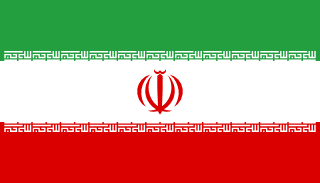 National Flag
Geography & Borders


Introduction & Background
Iran,a officially the Islamic Republic of Iran,b and also called Persia,c1314 is a country located in Western Asia. It is bordered by Iraq to the west, by Turkey, Azerbaijan and Armenia to the northwest, by the Caspian Sea and Turkmenistan to the north, by Afghanistan and Pakistan to the east, and by the Gulf of Oman and the Persian Gulf to the south. It covers an area of 1.64million square kilometres (0.63million square miles), making it the 17th-largest country. Iran has an estimated population of 86.8 million,8 making it the 17th-most populous country in the world, and the second-largest in the Middle East. Its largest cities, in descending order, are the capital Tehran, Mashhad, Isfahan, Karaj, Shiraz, and Tabriz.
The country is home to one of the world's oldest civilizations,1516 beginning with the formation of the Elamite kingdoms in the fourth millennium BC. It was first unified by the Medes, an ancient Iranian people, in the seventh century BC,17 and reached its territorial height in the sixth century BC, when Cyrus the Great founded the Achaemenid Persian Empire, which became one of the largest empires in history and a superpower.1819 The Achaemenid Empire fell to Alexander the Great in the fourth century BC and was subsequently divided into several Hellenistic states. An Iranian rebellion established the Parthian Empire in the third century BC, which was succeeded in the third century AD by the Sassanid Empire, a major world power for the next four centuries.2021 Arab Muslims conquered the empire in the seventh century AD, which led to the Islamization of Iran. It subsequently became a major center of Islamic culture and learning, with its art, literature, philosophy, and architecture spreading across the Muslim world and beyond during the Islamic Golden Age. Over the next two centuries, a series of native Iranian Muslim dynasties emerged before the Seljuk Turks and the Mongols conquered the region. In the 15th century, the native Safavids re-established a unified Iranian state and national identity,5 and converted the country to Shia Islam.622 Under the reign of Nader Shah in the 18th century, Iran presided over the most powerful military in the world,23 though by the 19th century, a series of conflicts with the Russian Empire led to significant territorial losses.2425 The early 20th century saw the Persian Constitutional Revolution. Efforts to nationalize its fossil fuel supply from Western companies led to an Anglo-American coup in 1953, which resulted in greater autocratic rule under Mohammad Reza Pahlavi and growing Western political influence.26 He went on to launch a far-reaching series of reforms in 1963.27 After the Iranian Revolution, the current Islamic Republic was established in 1979 by Ruhollah Khomeini, who became the country's first Supreme Leader.28
Minerals
Iran is the type locality (the site where the mineral was first discovered and described) for 7 recognized mineral species. Explore these discoveries below:
Loading mineral discoveries...
Flora & Flowers
Iran is home to a diverse range of plant species. Explore some of the native plants and flowers found in Iran below:
Loading plant species...
Animals & Wildlife
Iran is home to a diverse range of animal species. Explore some of the native animals and wildlife found in Iran below:
Loading animal species...
Music Albums
Explore the top 30 most-played music albums in Iran, sourced from Apple Music charts:
Loading music charts…