🇵🇭 Philippines
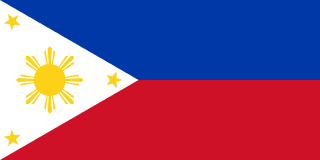 National Flag
Geography & Borders
This country has no land borders.
Introduction & Background
The Philippines (/ˈfɪlɪpiːnz/ⓘ; Template:Lang-fil),13 officially the Republic of the Philippines (Template:Lang-fil),d is an archipelagic country in Southeast Asia. It is situated in the western Pacific Ocean and consists of around 7,641 islands that are broadly categorized under three main geographical divisions from north to south: Luzon, Visayas, and Mindanao. The Philippines is bounded by the South China Sea to the west, the Philippine Sea to the east, and the Celebes Sea to the southwest. It shares maritime borders with Taiwan to the north, Japan to the northeast, Palau to the east and southeast, Indonesia to the south, Malaysia to the southwest, Vietnam to the west, and China to the northwest. The Philippines covers an area of 300,000km2 (120,000sqmi) and, as of 2021update, it had a population of around 109million people,14 making it the world's thirteenth-most populous country. The Philippines has diverse ethnicities and cultures throughout its islands. Manila is the country's capital, while the largest city is Quezon City; both lie within the urban area of Metro Manila.
Negritos, some of the archipelago's earliest inhabitants, were followed by successive waves of Austronesian peoples. Adoption of animism, Hinduism and Islam established island-kingdoms called Kedatuan, Rajahnates, and Sultanates. The arrival of Ferdinand Magellan, a Portuguese explorer leading a fleet for Spain, marked the beginning of Spanish colonization. In 1543, Spanish explorer Ruy López de Villaloboscode: spa promoted to code: es named the archipelago Las Islas Filipinas in honor of Philip II of Spain. Spanish settlement through Mexico, beginning in 1565, led to the Philippines becoming ruled by the Spanish Empire for more than 300 years. During this time, Catholicism became the dominant religion, and Manila became the western hub of trans-Pacific trade. In 1896, the Philippine Revolution began, which then became entwined with the 1898 Spanish–American War. Spain ceded the territory to the United States, while Filipino revolutionaries declared the First Philippine Republic. The ensuing Philippine–American War ended with the United States establishing control over the territory, which they maintained until the Japanese invasion of the islands during World War II. Following liberation, the Philippines became independent in 1946. Since then, the unitary sovereign state has often had a tumultuous experience with democracy, which included the overthrow of a decades-long dictatorship by a nonviolent revolution.
Minerals
No mineral species have their type localities (original discovery site) defined within Philippines in the Wikidata database. Explore other galleries to view geographic and climate data.
Flora & Flowers
Philippines is home to a diverse range of plant species. Explore some of the native plants and flowers found in Philippines below:
Loading plant species...
Animals & Wildlife
Philippines is home to a diverse range of animal species. Explore some of the native animals and wildlife found in Philippines below:
Loading animal species...
Music Albums
Explore the top 30 most-played music albums in Philippines, sourced from Apple Music charts:
Loading music charts…