Land
Home
Continents
  • All Galleries
  • Elevation Maps
  • Minerals
  • Flora & Flowers
  • Animals & Wildlife
  • Climate Change
  • Music Albums
Home
Continents
  • All Galleries
  • Elevation Maps
  • Minerals
  • Flora & Flowers
  • Animals & Wildlife
  • Climate Change
  • Music Albums
  • North America

    • North America
    • North America Elevation
    • North America Minerals
    • North America Flora & Flowers
    • North America Animals & Wildlife
    • North America Music Albums
    • North America Climate Change
    • Anguilla
    • Antigua and Barbuda
    • Aruba
    • Bahamas
    • Barbados
    • Belize
    • Bermuda
    • British Virgin Islands
    • Canada
    • Caribbean Netherlands
    • Cayman Islands
    • Costa Rica
    • Cuba
    • Curaçao
    • Dominica
    • Dominican Republic
    • El Salvador
    • Greenland
    • Grenada
    • Guadeloupe
    • Guatemala
    • Haiti
    • Honduras
    • Jamaica
    • Martinique
    • Mexico
    • Montserrat
    • Nicaragua
    • Panama
    • Puerto Rico
    • Saint Barthélemy
    • Saint Kitts and Nevis
    • Saint Lucia
    • Saint Martin
    • Saint Pierre and Miquelon
    • Saint Vincent and the Grenadines
    • Sint Maarten
    • Trinidad and Tobago
    • Turks and Caicos Islands
    • United States
    • United States Minor Outlying Islands
    • United States Virgin Islands
  • All Continents

🇨🇺 Cuba

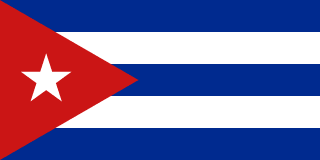
Flag of CubaNational Flag
🎵 National Anthem
Your browser does not support the audio element.

Geography & Borders

This country has no land borders.

Introduction & Background

Cuba (/ˈkjuːbə/ⓘ KEW-bə, Template:IPA-es), officially the Republic of Cuba (Template:Lang-es Template:IPA-es), is an island country comprising the island of Cuba, as well as Isla de la Juventud and several minor archipelagos. Cuba is located where the northern Caribbean Sea, Gulf of Mexico, and Atlantic Ocean meet. Cuba is located east of the Yucatán Peninsula (Mexico), south of both the American state of Florida and the Bahamas, west of Hispaniola (Haiti/Dominican Republic), and north of both Jamaica and the Cayman Islands. Havana is the largest city and capital; other major cities include Santiago de Cuba and Camagüey. The official area of the Republic of Cuba is 109,884km2 (42,426sqmi) (without the territorial waters) but a total of 350,730km² (135,418 sq mi) including the exclusive economic zone. Cuba is the second-most populous country in the Caribbean after Haiti, with over 11 million inhabitants.13

The territory that is now Cuba was inhabited by the Ciboney people from the 4th millennium BC with the Guanahatabey and Taino peoples until Spanish colonization in the 15th century.14 From the 15th century, it was a colony of Spain, and slavery was abolished in 1886, until the Spanish–American War of 1898, when Cuba was occupied by the United States and gained independence in 1902. In 1940, Cuba implemented a new constitution, but mounting political unrest culminated in a coup in 1952 and the subsequent dictatorship of Fulgencio Batista,15 which was later overthrown in January 1959 by the 26th of July Movement during the Cuban Revolution, which afterwards established communist rule under the leadership of Fidel Castro.161718 The country was a point of contention during the Cold War between the Soviet Union and the United States, and a nuclear war nearly broke out during the Cuban Missile Crisis of 1962.19 Following the collapse of the Soviet Union, Cuba faced a severe economic downturn in the 1990s, known as the Special Period. In 2008, Fidel Castro resigned after 49 years of leadership of Cuba and was replaced by his brother Raúl Castro.

Overview
AttributeDetails
Official Name
Republic of Cuba
Capital
Havana
Continent
North America
Region / Subregion
Americas / Caribbean
Population
9,748,007
Area
109,884 km²
Languages
Spanish
Currencies
Cuban convertible peso ($) [CUC], Cuban peso ($) [CUP]
Cost of Living
49.5 / 100 (Moderate)
Price per Coffee
$2.48
Price per Meal
$7.20
Timezones
UTC-05:00 (CST)
Bounding Box
Min: (19.86° N, 84.97° W)
Max: (23.19° N, 74.18° W)
Climate
Tropical / Warm
Terrain
Mostly hilly to mountainous volcanic islands with coral reefs and coastal plains
GDP (Nominal)
$107.35 billion (2020)
GDP (PPP)
N/A
GDP Growth Rate
-1.06% (2024)
Macroeconomic Overview
Cuba has a developing command economy dominated by state-run enterprises. The Communist Party of Cuba maintains high levels of public sector control and exerts significant influence over the Cuban economy. The island has a low cost of living, inexpensive public transport, as well as subsidized education, healthcare, and food. Cuba's economic growth has historically been weak due to high labour emigration, import dependency, an ongoing energy crisis, foreign trade sanctions, and limited tourism in Cuba. Cuba is one of the poorest countries in Latin America and the Caribbean with high inflation, food shortages, and almost 90% living in extreme poverty. It is heavily indebted due to its large public sector and high deficit spending, with a global sovereign debt burden.

Geography & Climate


  • Map Locations: Google Maps | OpenStreetMap

Minerals

Cuba is the type locality (the site where the mineral was first discovered and described) for 1 recognized mineral species. Explore these discoveries below:

Loading mineral discoveries...

Flora & Flowers

Cuba is home to a diverse range of plant species. Explore some of the native plants and flowers found in Cuba below:

Loading plant species...

Animals & Wildlife

Cuba is home to a diverse range of animal species. Explore some of the native animals and wildlife found in Cuba below:

Loading animal species...

Music Albums

Explore the top 30 most-played music albums in Cuba, sourced from Apple Music charts:

Loading music charts…


← Back to North America

Prev
Costa Rica
Next
Curaçao