🇱🇨 Saint Lucia
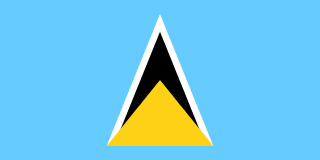 National Flag
Geography & Borders
This country has no land borders.
Introduction & Background
Saint Lucia (Template:Lang-acf, Template:Lang-fr) is an island country of the West Indies in the eastern Caribbean.9 The island was previously called Iouanalao and later Hewanorra, names given by the native Arawaks and Caribs, two Amerindian peoples.10 Part of the Windward Islands of the Lesser Antilles, it is located north/northeast of the island of Saint Vincent, northwest of Barbados and south of Martinique. It covers a land area of 617km2 (238 square miles) with an estimated population of over 180,000 people as of 2022. The national capital is the city of Castries.
The first proven inhabitants of the island, the Arawaks, are believed to have first settled in AD 200–400. Around 800 AD, the island would be taken over by the Kalinago. The French were the first Europeans to settle on the island, and they signed a treaty with the native Caribs in 1660. England took control of the island in 1663. In ensuing years, England and France fought 14 times for control of the island, and the rule of the island changed frequently. Eventually, the British took full control in 1814.11 Because it switched so often between British and French control, Saint Lucia was also known as the "Helen of the West" after the Greek mythological character, Helen of Troy.12
Minerals
No mineral species have their type localities (original discovery site) defined within Saint Lucia in the Wikidata database. Explore other galleries to view geographic and climate data.
Flora & Flowers
Saint Lucia is home to a diverse range of plant species. Explore some of the native plants and flowers found in Saint Lucia below:
Loading plant species...
Animals & Wildlife
Saint Lucia is home to a diverse range of animal species. Explore some of the native animals and wildlife found in Saint Lucia below:
Loading animal species...
Music Albums
Explore the top 30 most-played music albums in Saint Lucia, sourced from Apple Music charts:
Loading music charts…