🇵🇦 Panama
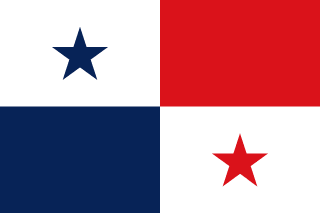 National Flag
Geography & Borders


Introduction & Background
Panama (/ˈpænəmɑː/ⓘ PAN-ə-mah, /pænəˈmɑː/ pan-ə-MAH; Template:Lang-es Template:IPA-es), officially the Republic of Panama (Template:Lang-es), is a transcontinental country spanning the southern part9 of North America and the northern part of South America. It is bordered by Costa Rica to the west, Colombia to the southeast, the Caribbean Sea to the north, and the Pacific Ocean to the south. Its capital and largest city is Panama City, whose metropolitan area is home to nearly half the country's 4 million people.1011
Panama was inhabited by indigenous tribes before Spanish colonists arrived in the 16th century. It broke away from Spain in 1821 and joined the Republic of Gran Colombia, a union of Nueva Granada, Ecuador, and Venezuela. After Gran Colombia dissolved in 1831, Panama and Nueva Granada eventually became the Republic of Colombia. With the backing of the United States, Panama seceded from Colombia in 1903, allowing the construction of the Panama Canal to be completed by the United States Army Corps of Engineers between 1904 and 1914. The 1977 Torrijos–Carter Treaties agreed to transfer the canal from the United States to Panama on December 31, 1999.12 The surrounding territory was first returned in 1979.13
Minerals
No mineral species have their type localities (original discovery site) defined within Panama in the Wikidata database. Explore other galleries to view geographic and climate data.
Flora & Flowers
Panama is home to a diverse range of plant species. Explore some of the native plants and flowers found in Panama below:
Loading plant species...
Animals & Wildlife
Panama is home to a diverse range of animal species. Explore some of the native animals and wildlife found in Panama below:
Loading animal species...
Music Albums
Explore the top 30 most-played music albums in Panama, sourced from Apple Music charts:
Loading music charts…