Land
Home
Continents
  • All Galleries
  • Elevation Maps
  • Minerals
  • Flora & Flowers
  • Animals & Wildlife
  • Climate Change
  • Music Albums
Home
Continents
  • All Galleries
  • Elevation Maps
  • Minerals
  • Flora & Flowers
  • Animals & Wildlife
  • Climate Change
  • Music Albums
  • Europe

    • Europe
    • Europe Elevation
    • Europe Minerals
    • Europe Flora & Flowers
    • Europe Animals & Wildlife
    • Europe Music Albums
    • Europe Climate Change
    • Åland Islands
    • Albania
    • Andorra
    • Austria
    • Belarus
    • Belgium
    • Bosnia and Herzegovina
    • Bulgaria
    • Croatia
    • Cyprus
    • Czechia
    • Denmark
    • Estonia
    • Faroe Islands
    • Finland
    • France
    • Germany
    • Gibraltar
    • Greece
    • Guernsey
    • Hungary
    • Iceland
    • Ireland
    • Isle of Man
    • Italy
    • Jersey
    • Kosovo
    • Latvia
    • Liechtenstein
    • Lithuania
    • Luxembourg
    • Malta
    • Moldova
    • Monaco
    • Montenegro
    • Netherlands
    • North Macedonia
    • Norway
    • Poland
    • Portugal
    • Romania
    • Russia
    • San Marino
    • Serbia
    • Slovakia
    • Slovenia
    • Spain
    • Svalbard and Jan Mayen
    • Sweden
    • Switzerland
    • Ukraine
    • United Kingdom
    • Vatican City
  • All Continents

🇧🇬 Bulgaria

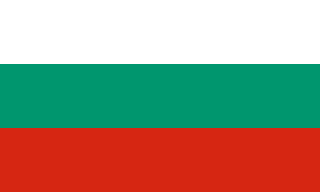
Flag of BulgariaNational Flag

Geography & Borders

GreeceGreeceNorth MacedoniaNorth MacedoniaRomaniaRomaniaSerbiaSerbiaTürkiyeTürkiye

Introduction & Background

Bulgaria (/bʌlˈɡɛəriə, bʊl-/ⓘ; Template:Lang-bg), officially the Republic of Bulgaria,a is a country in Southeast Europe. It is situated on the eastern flank of the Balkans, and is bordered by Romania to the north, Serbia and North Macedonia to the west, Greece and Turkey to the south, and the Black Sea to the east. Bulgaria covers a territory of 110,994 square kilometres (42,855sqmi), and is the sixteenth-largest country in Europe. Sofia is the nation's capital and largest city; other major cities are Plovdiv, Varna and Burgas.

One of the earliest societies in the lands of modern-day Bulgaria was the Neolithic Karanovo culture, which dates back to 6,500 BC. In the 6th to 3rd century BC the region was a battleground for ancient Thracians, Persians, Celts and Macedonians; stability came when the Roman Empire conquered the region in AD 45. After the Roman state splintered, tribal invasions in the region resumed. Around the 6th century, these territories were settled by the early Slavs. The Bulgars, led by Asparuh, attacked from the lands of Old Great Bulgaria and permanently invaded the Balkans in the late 7th century. They established First Bulgarian Empire, victoriously recognised by treaty in 681 AD by the Eastern Roman Empire. It dominated most of the Balkans and significantly influenced Slavic cultures by developing the Cyrillic script. The First Bulgarian Empire lasted until the early 11th century, when Byzantine emperor Basil II conquered and dismantled it. A successful Bulgarian revolt in 1185 established a Second Bulgarian Empire, which reached its apex under Ivan Asen II (1218–1241). After numerous exhausting wars and feudal strife, the empire disintegrated in 1396 and fell under Ottoman rule for nearly five centuries.

Overview
AttributeDetails
Official Name
Republic of Bulgaria
Capital
Sofia
Continent
Europe
Region / Subregion
Europe / Southeast Europe
Population
6,437,360
Area
110,879 km²
Languages
Bulgarian
Currencies
Euro (€) [EUR]
Cost of Living
38.1 / 100 (Moderate)
Price per Coffee
$1.91
Price per Meal
$8.00
Timezones
UTC+02:00 (EET)
Bounding Box
Min: (41.23° N, 22.38° E)
Max: (44.23° N, 28.56° E)
Climate
Temperate
Terrain
mountains and hills with lowlands in north and southeast
GDP (Nominal)
$113.34 billion (2024)
GDP (PPP)
$270.34 billion (2024)
GDP Growth Rate
3.39% (2024)
Macroeconomic Overview
The economy of Bulgaria functions on the principles of the free market, having a large private sector and a smaller public one. Bulgaria has an advanced, high-income economy according to the International Monetary Fund and the World Bank. It is a member of the European Union (EU), the World Trade Organization (WTO) and the Organization of the Black Sea Economic Cooperation (BSEC). The Bulgarian economy has experienced significant growth (538%), starting from $13.15 billion and reaching estimated gross domestic product (GDP) of $107 billion or $229 billion, GDP per capita of $36,000, average gross monthly salary of 2,468 leva, and average net monthly salary of $2,191. Until 2026, the national currency was the lev, pegged to the euro at 1.95583 leva for 1 euro. The lev was one of the strongest and most stable currencies in Eastern Europe. On 1 January 2026, Bulgaria adopted the euro and became a member of the Eurozone.

Geography & Climate


  • Map Locations: Google Maps | OpenStreetMap

Minerals

No mineral species have their type localities (original discovery site) defined within Bulgaria in the Wikidata database. Explore other galleries to view geographic and climate data.

Flora & Flowers

Bulgaria is home to a diverse range of plant species. Explore some of the native plants and flowers found in Bulgaria below:

Loading plant species...

Animals & Wildlife

Bulgaria is home to a diverse range of animal species. Explore some of the native animals and wildlife found in Bulgaria below:

Loading animal species...

Music Albums

Explore the top 30 most-played music albums in Bulgaria, sourced from Apple Music charts:

Loading music charts…


← Back to Europe

Prev
Bosnia and Herzegovina
Next
Croatia