🇩🇪 Germany
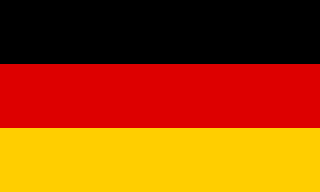 National Flag
Geography & Borders


Introduction & Background
Germany,e officially the Federal Republic of Germany,f is a country in Central Europe. It is the second most populous country in Europe after Russia, and the most populous member state of the European Union. Germany is situated between the Baltic and North seas to the north, and the Alps to the south; it covers an area of 357,022 square kilometres (137,847sqmi), with a population of almost 84 million within its 16 constituent states. Germany borders Denmark to the north, Poland and the Czech Republic to the east, Austria and Switzerland to the south, and France, Luxembourg, Belgium, and the Netherlands to the west. The nation's capital and most populous city is Berlin and its financial centre is Frankfurt; the largest urban area is the Ruhr.
Various Germanic tribes have inhabited the northern parts of modern Germany since classical antiquity. A region named Germania was documented before AD 100. In 962, the Kingdom of Germany formed the bulk of the Holy Roman Empire. During the 16th century, northern German regions became the centre of the Protestant Reformation. Following the Napoleonic Wars and the dissolution of the Holy Roman Empire in 1806, the German Confederation was formed in 1815.
Minerals
Germany is the type locality (the site where the mineral was first discovered and described) for 272 recognized mineral species. Explore these discoveries below:
Loading mineral discoveries...
Flora & Flowers
Germany is home to a diverse range of plant species. Explore some of the native plants and flowers found in Germany below:
Loading plant species...
Animals & Wildlife
Germany is home to a diverse range of animal species. Explore some of the native animals and wildlife found in Germany below:
Loading animal species...
Music Albums
Explore the top 30 most-played music albums in Germany, sourced from Apple Music charts:
Loading music charts…