Land
Home
Continents
  • All Galleries
  • Elevation Maps
  • Minerals
  • Flora & Flowers
  • Animals & Wildlife
  • Climate Change
  • Music Albums
Home
Continents
  • All Galleries
  • Elevation Maps
  • Minerals
  • Flora & Flowers
  • Animals & Wildlife
  • Climate Change
  • Music Albums
  • Europe

    • Europe
    • Europe Elevation
    • Europe Minerals
    • Europe Flora & Flowers
    • Europe Animals & Wildlife
    • Europe Music Albums
    • Europe Climate Change
    • Åland Islands
    • Albania
    • Andorra
    • Austria
    • Belarus
    • Belgium
    • Bosnia and Herzegovina
    • Bulgaria
    • Croatia
    • Cyprus
    • Czechia
    • Denmark
    • Estonia
    • Faroe Islands
    • Finland
    • France
    • Germany
    • Gibraltar
    • Greece
    • Guernsey
    • Hungary
    • Iceland
    • Ireland
    • Isle of Man
    • Italy
    • Jersey
    • Kosovo
    • Latvia
    • Liechtenstein
    • Lithuania
    • Luxembourg
    • Malta
    • Moldova
    • Monaco
    • Montenegro
    • Netherlands
    • North Macedonia
    • Norway
    • Poland
    • Portugal
    • Romania
    • Russia
    • San Marino
    • Serbia
    • Slovakia
    • Slovenia
    • Spain
    • Svalbard and Jan Mayen
    • Sweden
    • Switzerland
    • Ukraine
    • United Kingdom
    • Vatican City
  • All Continents

🇭🇺 Hungary

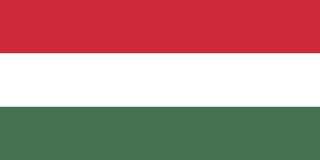
Flag of HungaryNational Flag
🎵 National Anthem
Your browser does not support the audio element.

Geography & Borders

AustriaAustriaCroatiaCroatiaRomaniaRomaniaSerbiaSerbiaSlovakiaSlovakiaSloveniaSloveniaUkraineUkraine

Introduction & Background

Hungary (Template:Lang-hu Template:IPA-hu) is a landlocked country in Central Europe.2 Spanning 93,030 square kilometres (35,920sqmi) of the Carpathian Basin, it is bordered by Slovakia to the north, Ukraine to the northeast, Romania to the east and southeast, Serbia to the south, Croatia and Slovenia to the southwest, and Austria to the west. Hungary has a population of 9.7 million, mostly ethnic Hungarians and a significant Romani minority. Hungarian, the official language, is the world's most widely spoken Uralic language and among the few non-Indo-European languages widely spoken in Europe.13 Budapest is the country's capital and largest city; other major urban areas include Debrecen, Szeged, Miskolc, Pécs, and Győr.

The territory of present-day Hungary has for centuries been a crossroads for various peoples, including Celts, Romans, Germanic tribes, Huns, West Slavs and the Avars. The foundation of the Hungarian state was established in the late 9th century AD with the conquest of the Carpathian Basin by Hungarian grand prince Árpád.1415 His great-grandson Stephen I ascended the throne in 1000, converting his realm to a Christian kingdom. By the 12th century, Hungary became a regional power, reaching its cultural and political height in the 15th century.16 Following the Battle of Mohács in 1526, it was partially occupied by the Ottoman Empire (1541–1699). Hungary came under Habsburg rule at the turn of the 18th century, later joining with the Austrian Empire to form Austria-Hungary, a major power into the early 20th century.17

Overview
AttributeDetails
Official Name
Hungary
Capital
Budapest
Continent
Europe
Region / Subregion
Europe / Central Europe
Population
9,539,502
Area
93,028 km²
Languages
Hungarian
Currencies
Hungarian forint (Ft) [HUF]
Cost of Living
40.1 / 100 (Moderate)
Price per Coffee
$2.00
Price per Meal
$7.88
Timezones
UTC+01:00 (CET)
Bounding Box
Min: (45.76° N, 16.2° E)
Max: (48.62° N, 22.71° E)
Climate
Temperate
Terrain
Mostly plains and low plateaus, with mountains on the southern and western borders
GDP (Nominal)
$222.72 billion (2024)
GDP (PPP)
$464.26 billion (2024)
GDP Growth Rate
0.56% (2024)
Macroeconomic Overview
The economy of Hungary is a developing, high-income mixed economy that is the 53rd-largest economy in the world with $265.037 billion annual output, and ranks 41st in the world in terms of GDP per capita measured by purchasing power parity. Hungary has a very high human development index and a skilled labour force, with the 22nd lowest income inequality by Gini index in the world. Hungary has an export-oriented market economy with a heavy emphasis on foreign trade; thus the country is the 35th largest export economy in the world. The country had more than $100 billion of exports in 2015, with a high trade surplus of $9.003 billion, of which 79% went to the European Union (EU) and 21% was extra-EU trade. Hungary's productive capacity is more than 80% privately owned, with 39.1% overall taxation, which funds the country's welfare economy. On the expenditure side, household consumption is the main component of GDP and accounts for 50% of its total, followed by gross fixed capital formation with 22% and government expenditure with 20%.

Geography & Climate


  • Map Locations: Google Maps | OpenStreetMap

Minerals

Hungary is the type locality (the site where the mineral was first discovered and described) for 9 recognized mineral species. Explore these discoveries below:

Loading mineral discoveries...

Flora & Flowers

Hungary is home to a diverse range of plant species. Explore some of the native plants and flowers found in Hungary below:

Loading plant species...

Animals & Wildlife

Hungary is home to a diverse range of animal species. Explore some of the native animals and wildlife found in Hungary below:

Loading animal species...

Music Albums

Explore the top 30 most-played music albums in Hungary, sourced from Apple Music charts:

Loading music charts…


← Back to Europe

Prev
Guernsey
Next
Iceland