🇪🇸 Spain
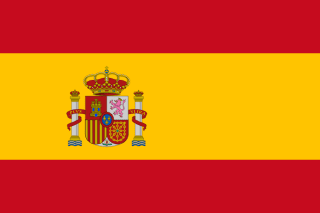 National Flag
Geography & Borders


Introduction & Background
Spain (Template:Lang-es, Template:IPA-es), or the Kingdom of Spain (Reino de España),f is a country primarily located in southwestern Europe with parts of territory in the Atlantic Ocean and across the Mediterranean Sea.11g The largest part of Spain is situated on the Iberian Peninsula; its territory also includes the Canary Islands in the Atlantic Ocean, the Balearic Islands in the Mediterranean Sea, and the autonomous cities of Ceuta and Melilla in Africa. The country's mainland is bordered to the south by Gibraltar; to the south and east by the Mediterranean Sea; to the north by France, Andorra and the Bay of Biscay; and to the west by Portugal and the Atlantic Ocean. With an area of 505,990km2 (195,360sqmi), Spain is the second-largest country in the European Union (EU) and, with a population exceeding 47.4 million, the fourth-most populous EU member state. Spain's capital and largest city is Madrid; other major urban areas include Barcelona, Valencia, Seville, Zaragoza, Málaga, Murcia, Palma de Mallorca, Las Palmas de Gran Canaria and Bilbao.
Anatomically modern humans first arrived in the Iberian Peninsula around 42,000 years ago.12 Pre-Roman peoples dwelled in the territory, in addition to the development of coastal trading colonies by Phoenicians and Ancient Greeks and the brief Carthaginian rule over the Mediterranean coastline. The Roman conquest and colonization of the peninsula (Hispania) ensued, bringing a Roman acculturation of the population. Receding of Western Roman imperial authority ushered in the immigration of non-Roman peoples. Eventually, the Visigoths emerged as the dominant power in the peninsula by the fifth century. In the early eighth century, most of the peninsula was conquered by the Umayyad Caliphate and during early Islamic rule, Al-Andalus became the dominant peninsular power, centered in Córdoba. Several Christian kingdoms emerged in Northern Iberia, chief among them León, Castile, Aragón, Portugal, and Navarre and over the next seven centuries, an intermittent southward expansion of these kingdoms, known as Reconquista, culminated with the Christian seizure of the Emirate of Granada in 1492. Jews and Muslims were forced to choose between conversion to Catholicism or expulsion and the Morisco converts were eventually expelled.
Minerals
Spain is the type locality (the site where the mineral was first discovered and described) for 17 recognized mineral species. Explore these discoveries below:
Loading mineral discoveries...
Flora & Flowers
Spain is home to a diverse range of plant species. Explore some of the native plants and flowers found in Spain below:
Loading plant species...
Animals & Wildlife
Spain is home to a diverse range of animal species. Explore some of the native animals and wildlife found in Spain below:
Loading animal species...
Music Albums
Explore the top 30 most-played music albums in Spain, sourced from Apple Music charts:
Loading music charts…