🇷🇸 Serbia
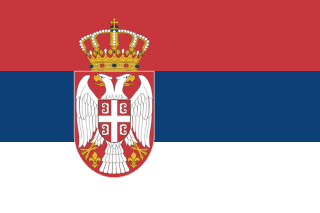 National Flag
Geography & Borders


Introduction & Background
Serbia (/ˈsɜːrbiə/ⓘ, SUR-bee-ə; Serbian: Србија, Srbija, Template:IPA-sh (listenⓘ)), officially the Republic of Serbia (Serbian: Република Србија, Republika Srbija, Template:IPA-sh (listenⓘ)), is a landlocked country in Southeastern and Central Europe, situated at the crossroads of the Pannonian Basin and the Balkans. It shares land borders with Hungary to the north, Romania to the northeast, Bulgaria to the southeast, North Macedonia to the south, Croatia and Bosnia and Herzegovina to the west, and Montenegro to the southwest, and claims a border with Albania through the disputed territory of Kosovo.a Serbia without Kosovo has about 6.7 million inhabitants, about 8.4 million if Kosvo is included. Its capital Belgrade is also the largest city.
Continuously inhabited since the Paleolithic Age, the territory of modern-day Serbia faced Slavic migrations in the 6th century, establishing several regional states in the early Middle Ages at times recognised as tributaries to the Byzantine, Frankish and Hungarian kingdoms. The Serbian Kingdom obtained recognition by the Holy See and Constantinople in 1217, reaching its territorial apex in 1346 as the Serbian Empire. By the mid-16th century, the Ottomans annexed the entirety of modern-day Serbia; their rule was at times interrupted by the Habsburg Empire, which began expanding towards Central Serbia from the end of the 17th century while maintaining a foothold in Vojvodina. In the early 19th century, the Serbian Revolution established the nation-state as the region's first constitutional monarchy, which subsequently expanded its territory.6 Following casualties in World War I, and the subsequent unification of the former Habsburg crownland of Vojvodina with Serbia, the country co-founded Yugoslavia with other South Slavic nations, which would exist in various political formations until the Yugoslav Wars of the 1990s. During the breakup of Yugoslavia, Serbia formed a union with Montenegro,7 which was peacefully dissolved in 2006, restoring Serbia's independence as a sovereign state for the first time since 1918.8 In 2008, representatives of the Assembly of Kosovo unilaterally declared independence, with mixed responses from the international community while Serbia continues to claim it as part of its own sovereign territory.
Minerals
Serbia is the type locality (the site where the mineral was first discovered and described) for 4 recognized mineral species. Explore these discoveries below:
Loading mineral discoveries...
Flora & Flowers
Serbia is home to a diverse range of plant species. Explore some of the native plants and flowers found in Serbia below:
Loading plant species...
Animals & Wildlife
Serbia is home to a diverse range of animal species. Explore some of the native animals and wildlife found in Serbia below:
Loading animal species...
Music Albums
Explore the top 30 most-played music albums in Serbia, sourced from Apple Music charts:
Loading music charts…