🇮🇸 Iceland
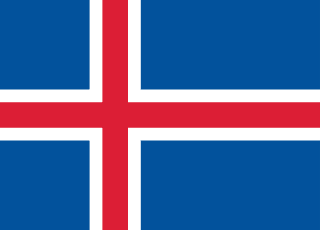 National Flag
Geography & Borders
This country has no land borders.
Introduction & Background
Iceland (Template:Lang-is; Template:IPA-is)d is a Nordic island country in the North Atlantic Ocean and in the Arctic Ocean. Iceland is the most sparsely populated country in Europe.12 Iceland's capital and largest city is Reykjavík, which (along with its surrounding areas) is home to over 65% of the population. Iceland is the biggest part of the Mid-Atlantic Ridge that rises above sea level, and its central volcanic plateau is erupting almost constantly.1314 The interior consists of a plateau characterised by sand and lava fields, mountains, and glaciers, and many glacial rivers flow to the sea through the lowlands. Iceland is warmed by the Gulf Stream and has a temperate climate, despite a high latitude just outside the Arctic Circle. Its high latitude and marine influence keep summers chilly, and most of its islands have a polar climate.
According to the ancient manuscript Landnámabókcode: isl promoted to code: is , the settlement of Iceland began in 874 AD when the Norwegian chieftain Ingólfr Arnarson became the first permanent settler on the island.15 In the following centuries, Norwegians, and to a lesser extent other Scandinavians, immigrated to Iceland, bringing with them thralls (i.e., slaves or serfs) of Gaelic origin.
Minerals
Iceland is the type locality (the site where the mineral was first discovered and described) for 9 recognized mineral species. Explore these discoveries below:
Loading mineral discoveries...
Flora & Flowers
Iceland is home to a diverse range of plant species. Explore some of the native plants and flowers found in Iceland below:
Loading plant species...
Animals & Wildlife
Iceland is home to a diverse range of animal species. Explore some of the native animals and wildlife found in Iceland below:
Loading animal species...
Music Albums
Explore the top 30 most-played music albums in Iceland, sourced from Apple Music charts:
Loading music charts…