🇧🇮 Burundi
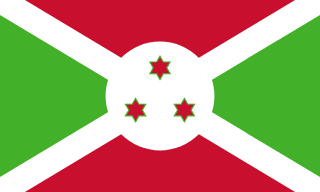 National Flag
Geography & Borders


Introduction & Background
Burundi (/bəˈrʊndi/ⓘ, /-ˈrʌn-/), officially the Republic of Burundi (Template:Lang-rn10 Template:IPA-rw; Swahili: Jamuhuri ya Burundi; French: République du Burundi Template:IPA-fr), is a landlocked country in the Great Rift Valley at the junction between the African Great Lakes region and East Africa. It is bordered by Rwanda to the north, Tanzania to the east and southeast, and the Democratic Republic of the Congo to the west; Lake Tanganyika lies along its southwestern border. The capital cities are Gitega and Bujumbura, the latter being the country's largest city.11
The Twa, Hutu and Tutsi peoples have lived in Burundi for at least 500 years. For more than 200 of those years, Burundi was an independent kingdom, until the beginning of the 20th century, when it became a German colony.12 After the First World War and Germany's defeat, the League of Nations "mandated" the territory to Belgium. After the Second World War, this transformed into a United Nations Trust Territory. Both Germans and Belgians ruled Burundi and Rwanda as a European colony known as Ruanda-Urundi.13 Burundi and Rwanda had never been under common rule until the time of European colonization of Africa.13
Minerals
Burundi is the type locality (the site where the mineral was first discovered and described) for 1 recognized mineral species. Explore these discoveries below:
Loading mineral discoveries...
Flora & Flowers
Burundi is home to a diverse range of plant species. Explore some of the native plants and flowers found in Burundi below:
Loading plant species...
Animals & Wildlife
Burundi is home to a diverse range of animal species. Explore some of the native animals and wildlife found in Burundi below:
Loading animal species...
Music Albums
Explore the top 30 most-played music albums in Burundi, sourced from Apple Music charts:
Loading music charts…