Land
Home
Continents
  • All Galleries
  • Elevation Maps
  • Minerals
  • Flora & Flowers
  • Animals & Wildlife
  • Climate Change
  • Music Albums
Home
Continents
  • All Galleries
  • Elevation Maps
  • Minerals
  • Flora & Flowers
  • Animals & Wildlife
  • Climate Change
  • Music Albums
  • Africa

    • Africa
    • Africa Elevation
    • Africa Minerals
    • Africa Flora & Flowers
    • Africa Animals & Wildlife
    • Africa Music Albums
    • Africa Climate Change
    • Algeria
    • Angola
    • Benin
    • Botswana
    • British Indian Ocean Territory
    • Burkina Faso
    • Burundi
    • Cameroon
    • Cape Verde
    • Central African Republic
    • Chad
    • Comoros
    • Congo
    • Djibouti
    • DR Congo
    • Egypt
    • Equatorial Guinea
    • Eritrea
    • Eswatini
    • Ethiopia
    • Gabon
    • Gambia
    • Ghana
    • Guinea
    • Guinea-Bissau
    • Ivory Coast
    • Kenya
    • Lesotho
    • Liberia
    • Libya
    • Madagascar
    • Malawi
    • Mali
    • Mauritania
    • Mauritius
    • Mayotte
    • Morocco
    • Mozambique
    • Namibia
    • Niger
    • Nigeria
    • Réunion
    • Rwanda
    • Saint Helena, Ascension and Tristan da Cunha
    • São Tomé and Príncipe
    • Senegal
    • Seychelles
    • Sierra Leone
    • Somalia
    • South Africa
    • South Sudan
    • Sudan
    • Tanzania
    • Togo
    • Tunisia
    • Uganda
    • Western Sahara
    • Zambia
    • Zimbabwe
  • All Continents

🇨🇻 Cape Verde

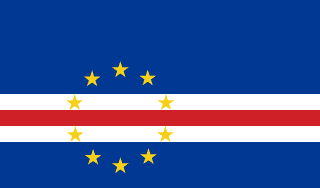
Flag of Cape VerdeNational Flag

Geography & Borders

This country has no land borders.

Introduction & Background

Cape Verde (/ˈvɜːrd(i)/ⓘ) or Cabo Verde (/ˌkɑːboʊ ˈvɜːrdeɪ/ⓘ, /ˌkæb-/; Template:IPA-pt), officially the Republic of Cabo Verde, is an archipelago and island country in the central Atlantic Ocean, consisting of ten volcanic islands with a combined land area of about 4,033 square kilometres (1,557sqmi).10 These islands lie between 600 and 850 kilometres (320 and 460 nautical miles) west of Cap-Vert, the westernmost point of continental Africa. The Cape Verde islands form part of the Macaronesia ecoregion, along with the Azores, the Canary Islands, Madeira, and the Savage Isles.

The Cape Verde archipelago was uninhabited until the 15th century, when Portuguese explorers discovered and colonized the islands, thus establishing the first European settlement in the tropics. Because the Cape Verde islands were located in a convenient location to play a role in the Atlantic slave trade, Cape Verde became economically prosperous during the 16th and 17th centuries, attracting merchants, privateers, and pirates. It declined economically in the 19th century after the suppression of the Atlantic slave trade, and many of its inhabitants emigrated during that period. However, Cape Verde gradually recovered economically by becoming an important commercial center and useful stopover point along major shipping routes. In 1951, Cape Verde was incorporated as an overseas department of Portugal, but its inhabitants continued to campaign for independence, which they achieved in 1975.

Overview
AttributeDetails
Official Name
Republic of Cabo Verde
Capital
Praia
Continent
Africa
Region / Subregion
Africa / Western Africa
Population
491,233
Area
4,033 km²
Languages
Portuguese
Currencies
Cape Verdean escudo (Esc) [CVE]
Cost of Living
25 / 100 (Low)
Price per Coffee
$1.25
Price per Meal
$5.00
Timezones
UTC-01:00 (CVT)
Bounding Box
Min: (15.712835272137982° N, 24.296735345814636° W)
Max: (16.28716472786202° N, 23.703264654185364° W)
Climate
Arid / Desertic
Terrain
Low coastal plains, savanna grasslands, and tropical rainforests
GDP (Nominal)
$2.73 billion (2024)
GDP (PPP)
$5.88 billion (2024)
GDP Growth Rate
7.24% (2024)
Macroeconomic Overview
Cape Verde has a developing economy that is service-oriented with a focus on commerce, trade, transport and public services. It is a small archipelagic nation that lacks resources and has experienced severe droughts. Agriculture is made difficult by lack of rain and is restricted to only four islands for most of the year. Cape Verde's economy has been steadily growing since the late 1990s, and it is now officially considered a country of average development, being only the second African country to have achieved such transition, after Botswana in 1994. Cape Verde has significant cooperation with Portugal at every level of the economy, which has led it to link its currency first to the Portuguese escudo and, in 1999, to the euro.

Geography & Climate


  • Map Locations: Google Maps | OpenStreetMap

Minerals

No mineral species have their type localities (original discovery site) defined within Cape Verde in the Wikidata database. Explore other galleries to view geographic and climate data.

Flora & Flowers

Cape Verde is home to a diverse range of plant species. Explore some of the native plants and flowers found in Cape Verde below:

Loading plant species...

Animals & Wildlife

Cape Verde is home to a diverse range of animal species. Explore some of the native animals and wildlife found in Cape Verde below:

Loading animal species...

Music Albums

Explore the top 30 most-played music albums in Cape Verde, sourced from Apple Music charts:

Loading music charts…


← Back to Africa

Prev
Cameroon
Next
Central African Republic