Land
Home
Continents
  • All Galleries
  • Elevation Maps
  • Minerals
  • Flora & Flowers
  • Animals & Wildlife
  • Climate Change
  • Music Albums
Home
Continents
  • All Galleries
  • Elevation Maps
  • Minerals
  • Flora & Flowers
  • Animals & Wildlife
  • Climate Change
  • Music Albums
  • Africa

    • Africa
    • Africa Elevation
    • Africa Minerals
    • Africa Flora & Flowers
    • Africa Animals & Wildlife
    • Africa Music Albums
    • Africa Climate Change
    • Algeria
    • Angola
    • Benin
    • Botswana
    • British Indian Ocean Territory
    • Burkina Faso
    • Burundi
    • Cameroon
    • Cape Verde
    • Central African Republic
    • Chad
    • Comoros
    • Congo
    • Djibouti
    • DR Congo
    • Egypt
    • Equatorial Guinea
    • Eritrea
    • Eswatini
    • Ethiopia
    • Gabon
    • Gambia
    • Ghana
    • Guinea
    • Guinea-Bissau
    • Ivory Coast
    • Kenya
    • Lesotho
    • Liberia
    • Libya
    • Madagascar
    • Malawi
    • Mali
    • Mauritania
    • Mauritius
    • Mayotte
    • Morocco
    • Mozambique
    • Namibia
    • Niger
    • Nigeria
    • Réunion
    • Rwanda
    • Saint Helena, Ascension and Tristan da Cunha
    • São Tomé and Príncipe
    • Senegal
    • Seychelles
    • Sierra Leone
    • Somalia
    • South Africa
    • South Sudan
    • Sudan
    • Tanzania
    • Togo
    • Tunisia
    • Uganda
    • Western Sahara
    • Zambia
    • Zimbabwe
  • All Continents

🇳🇬 Nigeria

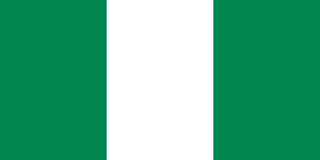
Flag of NigeriaNational Flag

Geography & Borders

BeninBeninCameroonCameroonChadChadNigerNiger

Introduction & Background

Nigeria (/naɪˈdʒɪəriə/ⓘ ny-JEER-ee-ə),a officially the Federal Republic of Nigeria, is a country in West Africa. It is situated between the Sahel to the north and the Gulf of Guinea to the south in the Atlantic Ocean. It covers an area of 923,769 square kilometres (356,669mi2), and with a population of over 225 million, it is the most populous country in Africa, and the world's sixth-most populous country. Nigeria borders Niger in the north, Chad in the northeast, Cameroon in the east, and Benin in the west. Nigeria is a federal republic comprising 36 states and the Federal Capital Territory, where the capital, Abuja, is located. The largest city in Nigeria is Lagos, one of the largest metropolitan areas in the world and the second-largest in Africa.

Nigeria has been home to several indigenous pre-colonial states and kingdoms since the second millennium BC, with the Nok civilization in the 15th century BC, marking the first internal unification in the country. The modern state originated with British colonialization in the 19th century, taking its present territorial shape with the merging of the Southern Nigeria Protectorate and Northern Nigeria Protectorate in 1914 by Lord Lugard. The British set up administrative and legal structures while practising indirect rule through traditional chiefdoms in the Nigeria region.9 Nigeria became a formally independent federation on 1 October 1960. It experienced a civil war from 1967 to 1970, followed by a succession of military dictatorships and democratically elected civilian governments until achieving a stable democracy in the 1999 presidential election. The 2015 general election was the first time an incumbent president would lose re-election.10

Overview
AttributeDetails
Official Name
Federal Republic of Nigeria
Capital
Abuja
Continent
Africa
Region / Subregion
Africa / Western Africa
Population
223,800,000
Area
923,768 km²
Languages
English
Currencies
Nigerian naira (₦) [NGN]
Cost of Living
33.3 / 100 (Low)
Price per Coffee
$1.66
Price per Meal
$6.95
Timezones
UTC+01:00 (WAT)
Bounding Box
Min: (4.24° N, 2.69° E)
Max: (13.87° N, 14.58° E)
Climate
Tropical / Warm
Terrain
Low coastal plains, savanna grasslands, and tropical rainforests
GDP (Nominal)
$252.26 billion (2024)
GDP (PPP)
$2.11 trillion (2024)
GDP Growth Rate
4.06% (2024)
Macroeconomic Overview
Nigeria has a lower-middle-income, mixed economy and emerging market, with expanding manufacturing, financial, service, communications, technology, and entertainment sectors. It is ranked as the 52nd-largest economy in the world in terms of nominal GDP, the second largest in Africa in terms of purchasing power parity, and the 19th-largest in terms of purchasing power parity. The country's re-emergent manufacturing sector became the largest on the continent in 2013, and it produces a large proportion of goods and services for the region of West Africa. Nigeria's debt-to-GDP ratio was 36.63% in 2021 according to the IMF.

Geography & Climate


  • Map Locations: Google Maps | OpenStreetMap

Minerals

Nigeria is the type locality (the site where the mineral was first discovered and described) for 2 recognized mineral species. Explore these discoveries below:

Loading mineral discoveries...

Flora & Flowers

Nigeria is home to a diverse range of plant species. Explore some of the native plants and flowers found in Nigeria below:

Loading plant species...

Animals & Wildlife

Nigeria is home to a diverse range of animal species. Explore some of the native animals and wildlife found in Nigeria below:

Loading animal species...

Music Albums

Explore the top 30 most-played music albums in Nigeria, sourced from Apple Music charts:

Loading music charts…


← Back to Africa

Prev
Niger
Next
Réunion