🇿🇲 Zambia
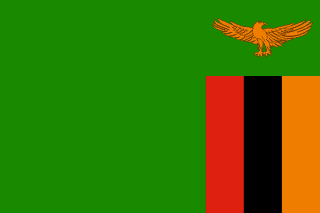 National Flag
Geography & Borders


Introduction & Background
Zambia (/ˈzæmbiə, ˈzɑːm-/), officially the Republic of Zambia, is a landlocked country at the crossroads of Central, Southern and East Africa,8 although it is typically referred to as being in Southern Africa at its most central point.9 Its neighbours are the Democratic Republic of the Congo to the north, Tanzania to the northeast, Malawi to the east, Mozambique to the southeast, Zimbabwe and Botswana to the south, Namibia to the southwest, and Angola to the west. The capital city of Zambia is Lusaka, located in the south-central part of Zambia. The nation's population of around 19.5 million is concentrated mainly around Lusaka in the south and the Copperbelt Province to the north, the core economic hubs of the country.
Originally inhabited by Khoisan peoples, the region was affected by the Bantu expansion of the thirteenth century. Following the arrival of European explorers in the eighteenth century, the British colonised the region into the British protectorates of Barotseland-North-Western Rhodesia and North-Eastern Rhodesia comprising 73 tribes, towards the end of the nineteenth century. These were merged in 1911 to form Northern Rhodesia. For most of the colonial period, Zambia was governed by an administration appointed from London with the advice of the British South Africa Company.10
Minerals
Zambia is the type locality (the site where the mineral was first discovered and described) for 5 recognized mineral species. Explore these discoveries below:
Loading mineral discoveries...
Flora & Flowers
Zambia is home to a diverse range of plant species. Explore some of the native plants and flowers found in Zambia below:
Loading plant species...
Animals & Wildlife
Zambia is home to a diverse range of animal species. Explore some of the native animals and wildlife found in Zambia below:
Loading animal species...
Music Albums
Explore the top 30 most-played music albums in Zambia, sourced from Apple Music charts:
Loading music charts…