🇺🇬 Uganda
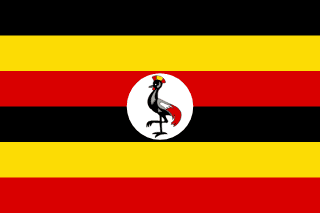 National Flag
Geography & Borders


Introduction & Background
Uganda (Yuganda in Ugandan languages), officially the Republic of Uganda (Template:Lang-sw11), is a landlocked country in East Africa. The country is bordered to the east by Kenya, to the north by South Sudan, to the west by the Democratic Republic of the Congo, to the south-west by Rwanda, and to the south by Tanzania. The southern part of the country includes a substantial portion of Lake Victoria, shared with Kenya and Tanzania. Uganda is in the African Great Lakes region. Uganda also lies within the Nile basin and has a varied but generally a modified equatorial climate. It has a population of around 49 million, of which 8.5 million live in the capital and largest city of Kampala.
Uganda is named after the Buganda kingdom, which encompasses a large portion of the south of the country, including the capital Kampala and whose language Luganda is widely spoken throughout the country. From 1894, the area was ruled as a protectorate by the United Kingdom, which established administrative law across the territory. Uganda gained independence from the UK on 9 October 1962. The period since then has been marked by violent conflicts, including an eight-year-long military dictatorship led by Idi Amin.
Minerals
Uganda is the type locality (the site where the mineral was first discovered and described) for 1 recognized mineral species. Explore these discoveries below:
Loading mineral discoveries...
Flora & Flowers
Uganda is home to a diverse range of plant species. Explore some of the native plants and flowers found in Uganda below:
Loading plant species...
Animals & Wildlife
Uganda is home to a diverse range of animal species. Explore some of the native animals and wildlife found in Uganda below:
Loading animal species...
Music Albums
Explore the top 30 most-played music albums in Uganda, sourced from Apple Music charts:
Loading music charts…