Land
Home
Continents
  • All Galleries
  • Elevation Maps
  • Minerals
  • Flora & Flowers
  • Animals & Wildlife
  • Climate Change
  • Music Albums
Home
Continents
  • All Galleries
  • Elevation Maps
  • Minerals
  • Flora & Flowers
  • Animals & Wildlife
  • Climate Change
  • Music Albums
  • Africa

    • Africa
    • Africa Elevation
    • Africa Minerals
    • Africa Flora & Flowers
    • Africa Animals & Wildlife
    • Africa Music Albums
    • Africa Climate Change
    • Algeria
    • Angola
    • Benin
    • Botswana
    • British Indian Ocean Territory
    • Burkina Faso
    • Burundi
    • Cameroon
    • Cape Verde
    • Central African Republic
    • Chad
    • Comoros
    • Congo
    • Djibouti
    • DR Congo
    • Egypt
    • Equatorial Guinea
    • Eritrea
    • Eswatini
    • Ethiopia
    • Gabon
    • Gambia
    • Ghana
    • Guinea
    • Guinea-Bissau
    • Ivory Coast
    • Kenya
    • Lesotho
    • Liberia
    • Libya
    • Madagascar
    • Malawi
    • Mali
    • Mauritania
    • Mauritius
    • Mayotte
    • Morocco
    • Mozambique
    • Namibia
    • Niger
    • Nigeria
    • Réunion
    • Rwanda
    • Saint Helena, Ascension and Tristan da Cunha
    • São Tomé and Príncipe
    • Senegal
    • Seychelles
    • Sierra Leone
    • Somalia
    • South Africa
    • South Sudan
    • Sudan
    • Tanzania
    • Togo
    • Tunisia
    • Uganda
    • Western Sahara
    • Zambia
    • Zimbabwe
  • All Continents

🇪🇬 Egypt

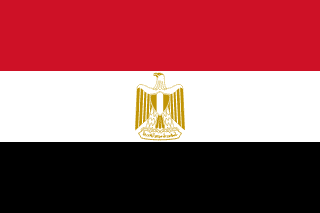
Flag of EgyptNational Flag

Geography & Borders

IsraelIsraelLibyaLibyaPalestinePalestineSudanSudan

Introduction & Background

Egypt (Template:Lang-ar Miṣr Template:IPA-ar, Template:IPA-arz), officially the Arab Republic of Egypt, is a transcontinental country spanning the northeast corner of Africa and southwest corner of Asia via a land bridge formed by the Sinai Peninsula. It is bordered by the Mediterranean Sea to the north, the Gaza Strip of Palestine and Israel to the northeast, the Red Sea to the east, Sudan to the south, and Libya to the west. The Gulf of Aqaba in the northeast separates Egypt from Jordan and Saudi Arabia. Cairo is the capital and largest city of Egypt, while Alexandria, the second-largest city, is an important industrial and tourist hub at the Mediterranean coast.13 At approximately 100 million inhabitants, Egypt is the 14th-most populated country in the world.

Egypt has one of the longest histories of any country, tracing its heritage along the Nile Delta back to the 6th–4th millennia BCE. Considered a cradle of civilisation, Ancient Egypt saw some of the earliest developments of writing, agriculture, urbanisation, organised religion and central government.14 Iconic monuments such as the Giza Necropolis and its Great Sphinx, as well the ruins of Memphis, Thebes, Karnak, and the Valley of the Kings, reflect this legacy and remain a significant focus of scientific and popular interest. Egypt's long and rich cultural heritage is an integral part of its national identity, which reflects its unique transcontinental location being simultaneously Mediterranean, Middle Eastern and North African.15 Egypt was an early and important centre of Christianity, but was largely Islamised in the seventh century and remains a predominantly Sunni Muslim country, albeit with a significant Christian minority, along with other lesser practiced faiths.

Overview
AttributeDetails
Official Name
Arab Republic of Egypt
Capital
Cairo
Continent
Africa
Region / Subregion
Africa / Northern Africa
Population
107,271,260
Area
1,002,450 km²
Languages
Arabic
Currencies
Egyptian pound (£) [EGP]
Cost of Living
24.8 / 100 (Low)
Price per Coffee
$1.24
Price per Meal
$5.28
Timezones
UTC+02:00 (EET)
Bounding Box
Min: (22° N, 24.7° E)
Max: (31.59° N, 36.87° E)
Climate
Arid / Desertic
Terrain
High plateaus, coastal plains, and the vast Sahara Desert
GDP (Nominal)
$389.06 billion (2024)
GDP (PPP)
$2.23 trillion (2024)
GDP Growth Rate
2.40% (2024)
Macroeconomic Overview
Egypt has a developing mixed economy, combining private business with government regulation. It is the 2nd largest economy in Africa, and 42nd in worldwide ranking as of 2026. It is a major emerging market economy and a member of the African Union, BRICS, and a signatory to the African Continental Free Trade Area (AfCFTA). Since the 2000s, structural reforms including fiscal and monetary policies, tax adjustments, privatization, and new business legislation have helped Egypt move towards a more market-oriented economy and increased foreign investment. The reforms and policies strengthened macroeconomic annual growth results and helped to address the country's serious unemployment and poverty rates.

Geography & Climate


  • Map Locations: Google Maps | OpenStreetMap

Minerals

Egypt is the type locality (the site where the mineral was first discovered and described) for 3 recognized mineral species. Explore these discoveries below:

Loading mineral discoveries...

Flora & Flowers

Egypt is home to a diverse range of plant species. Explore some of the native plants and flowers found in Egypt below:

Loading plant species...

Animals & Wildlife

Egypt is home to a diverse range of animal species. Explore some of the native animals and wildlife found in Egypt below:

Loading animal species...

Music Albums

Explore the top 30 most-played music albums in Egypt, sourced from Apple Music charts:

Loading music charts…


← Back to Africa

Prev
DR Congo
Next
Equatorial Guinea