Land
Home
Continents
  • All Galleries
  • Elevation Maps
  • Minerals
  • Flora & Flowers
  • Animals & Wildlife
  • Climate Change
  • Music Albums
Home
Continents
  • All Galleries
  • Elevation Maps
  • Minerals
  • Flora & Flowers
  • Animals & Wildlife
  • Climate Change
  • Music Albums
  • Africa

    • Africa
    • Africa Elevation
    • Africa Minerals
    • Africa Flora & Flowers
    • Africa Animals & Wildlife
    • Africa Music Albums
    • Africa Climate Change
    • Algeria
    • Angola
    • Benin
    • Botswana
    • British Indian Ocean Territory
    • Burkina Faso
    • Burundi
    • Cameroon
    • Cape Verde
    • Central African Republic
    • Chad
    • Comoros
    • Congo
    • Djibouti
    • DR Congo
    • Egypt
    • Equatorial Guinea
    • Eritrea
    • Eswatini
    • Ethiopia
    • Gabon
    • Gambia
    • Ghana
    • Guinea
    • Guinea-Bissau
    • Ivory Coast
    • Kenya
    • Lesotho
    • Liberia
    • Libya
    • Madagascar
    • Malawi
    • Mali
    • Mauritania
    • Mauritius
    • Mayotte
    • Morocco
    • Mozambique
    • Namibia
    • Niger
    • Nigeria
    • Réunion
    • Rwanda
    • Saint Helena, Ascension and Tristan da Cunha
    • São Tomé and Príncipe
    • Senegal
    • Seychelles
    • Sierra Leone
    • Somalia
    • South Africa
    • South Sudan
    • Sudan
    • Tanzania
    • Togo
    • Tunisia
    • Uganda
    • Western Sahara
    • Zambia
    • Zimbabwe
  • All Continents

🇨🇲 Cameroon

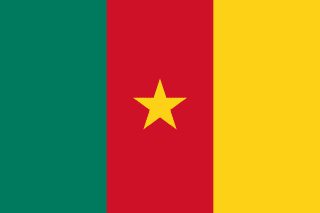
Flag of CameroonNational Flag

Geography & Borders

Central African RepublicCentral African RepublicChadChadCongoCongoEquatorial GuineaEquatorial GuineaGabonGabonNigeriaNigeria

Introduction & Background

Cameroon (/ˌkæməˈruːn/ⓘ; Template:Lang-fr, Template:Lang-ff), officially the Republic of Cameroon (Template:Lang-fr), is a country in west-central Africa. It is bordered by Nigeria to the west and north; Chad to the northeast; the Central African Republic to the east; and Equatorial Guinea, Gabon and the Republic of the Congo to the south. Its coastline lies on the Bight of Biafra, part of the Gulf of Guinea and the Atlantic Ocean. Due to its strategic position at the crossroads between West Africa and Central Africa, it has been categorized as being in both camps. Its nearly 27 million people speak 250 native languages.101112

Early inhabitants of the territory included the Sao civilisation around Lake Chad, and the Baka hunter-gatherers in the southeastern rainforest. Portuguese explorers reached the coast in the 15th century and named the area Rio dos Camarões (Shrimp River), which became Cameroon in English. Fulani soldiers founded the Adamawa Emirate in the north in the 19th century, and various ethnic groups of the west and northwest established powerful chiefdoms and fondoms. Cameroon became a German colony in 1884 known as Kamerun. After World War I, it was divided between France and the United Kingdom as League of Nations mandates. The Union des Populations du Cameroun (UPC) political party advocated independence, but was outlawed by France in the 1950s, leading to the national liberation insurgency fought between French and UPC militant forces until early 1971. In 1960, the French-administered part of Cameroon became independent, as the Republic of Cameroun, under President Ahmadou Ahidjo. The southern part of British Cameroons federated with it in 1961 to form the Federal Republic of Cameroon. The federation was abandoned in 1972. The country was renamed the United Republic of Cameroon in 1972 and back to the Republic of Cameroon in 1984 by a presidential decree by president Paul Biya. Paul Biya, the incumbent president, has led the country since 1982 following Ahidjo's resignation; he previously held office as prime minister from 1975 on. Cameroon is governed as a Unitary Presidential Republic.

Overview
AttributeDetails
Official Name
Republic of Cameroon
Capital
Yaoundé
Continent
Africa
Region / Subregion
Africa / Middle Africa
Population
29,442,327
Area
475,442 km²
Languages
English, French
Currencies
Central African CFA franc (Fr) [XAF]
Cost of Living
25 / 100 (Low)
Price per Coffee
$1.25
Price per Meal
$5.00
Timezones
UTC+01:00 (WAT)
Bounding Box
Min: (1.73° N, 8.49° E)
Max: (12.86° N, 16.01° E)
Climate
Tropical / Warm
Terrain
Tropical rainforests, river basins, and plateaus
GDP (Nominal)
$53.30 billion (2024)
GDP (PPP)
$162.77 billion (2024)
GDP Growth Rate
3.52% (2024)
Macroeconomic Overview
Cameroon has a developing economy considered lower-middle income. It was one of the most prosperous in Africa for a quarter of a century after independence. The drop in commodity prices for its principal exports – petroleum, cocoa, coffee, and cotton – in the mid-1980s, combined with an overvalued currency and economic mismanagement, led to a decade-long recession. Real per capita GDP fell by more than 60% from 1986 to 1994. The current account and fiscal deficits widened, and foreign debt grew. Yet because of its oil reserves and favorable agricultural conditions, Cameroon still has one of the best-endowed primary commodity economies in sub-Saharan Africa.

Geography & Climate


  • Map Locations: Google Maps | OpenStreetMap

Minerals

No mineral species have their type localities (original discovery site) defined within Cameroon in the Wikidata database. Explore other galleries to view geographic and climate data.

Flora & Flowers

Cameroon is home to a diverse range of plant species. Explore some of the native plants and flowers found in Cameroon below:

Loading plant species...

Animals & Wildlife

Cameroon is home to a diverse range of animal species. Explore some of the native animals and wildlife found in Cameroon below:

Loading animal species...

Music Albums

Explore the top 30 most-played music albums in Cameroon, sourced from Apple Music charts:

Loading music charts…


← Back to Africa

Prev
Burundi
Next
Cape Verde