🇱🇾 Libya
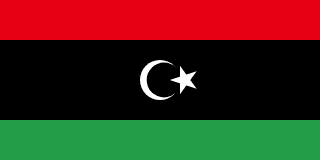 National Flag
Geography & Borders


Introduction & Background
Libya (/ˈlɪbiə/ⓘ; Template:Lang-ar, Template:IPA-ar), officially the State of Libya (Template:Lang-ar),78910 is a country in the Maghreb region in North Africa. It is bordered by the Mediterranean Sea to the north, Egypt to the east, Sudan to the southeast, Chad to the south, Niger to the southwest, Algeria to the west, and Tunisia to the northwest. Libya is made of three historical regions: Tripolitania, Fezzan, and Cyrenaica. With an area of almost 700,000 square miles (1.8 million km2), it is the fourth-largest country in Africa and the Arab world, and the 16th-largest in the world.11 Libya has the 10th-largest proven oil reserves in the world.12 The largest city and capital, Tripoli, is located in western Libya and contains over three million of Libya's seven million people.13
Libya has been inhabited by Berbers since the late Bronze Age as descendants from Iberomaurusian and Capsian cultures.14 In classical antiquity, the Phoenicians established city-states and trading posts in western Libya, while several Greek cities were established in the East. Parts of Libya were variously ruled by Carthaginians, Persians, and Greeks before the entire region becoming a part of the Roman Empire. Libya was an early center of Christianity. After the fall of the Western Roman Empire, the area of Libya was mostly occupied by the Vandals until the 7th century when invasions brought Islam to the region. In the 16th century, the Spanish Empire and the Knights of St John occupied Tripoli until Ottoman rule began in 1551. Libya was involved in the Barbary Wars of the 18th and 19th centuries. Ottoman rule continued until the Italo-Turkish War, which resulted in the Italian occupation of Libya and the establishment of two colonies, Italian Tripolitania and Italian Cyrenaica (1911–1934), later unified in the Italian Libya colony from 1934 to 1943.
Minerals
No mineral species have their type localities (original discovery site) defined within Libya in the Wikidata database. Explore other galleries to view geographic and climate data.
Flora & Flowers
Libya is home to a diverse range of plant species. Explore some of the native plants and flowers found in Libya below:
Loading plant species...
Animals & Wildlife
Libya is home to a diverse range of animal species. Explore some of the native animals and wildlife found in Libya below:
Loading animal species...
Music Albums
Explore the top 30 most-played music albums in Libya, sourced from Apple Music charts:
Loading music charts…